While digital multimeters are still commonly used in benchtop testing, there are now a number of interconnect options for system integration; e.g., some multimeters offer hobbyists and engineers alike USB interfaces and general purpose interface buses for control via PC using test commands. Certain LabVIEW drivers allow one to integrate one’s multimeter into a larger test system. Then there are front-panel thermocouple inputs which allow one to connect directly to many prevalent temperature measurement sensors.
Indicating a multimeter’s susceptibility to noise, digital multimeters have specifications for normal mode rejection ratio and common mode rejection ratio with common values of over sixty decibels and one hundred twenty decibels. The noise produced by one’s multimeter is particularly important when measuring low signal levels, and electromagnetic interference standards influence compliance levels.
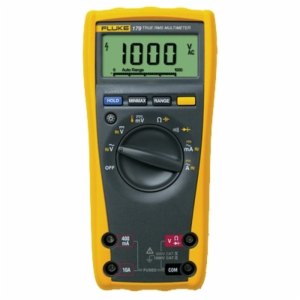
Because of its influence on throughput, a digital multimeter’s measurement speed — typically displayed as readings per second at a specific resolution level — is especially important in production environments.
A number of modern multimeters have resolution levels that one can program, thus simplifying balancing speed and accuracy. The integration period, which is the amount of time when a signal is sampled by the multimeter’s analog-to-digital convertor, is typically displayed in number of power line cycles; number of power line cycles made up of integer multiples — one, five, ten, etc. — will reduce the fifty/sixty hertz line pickup, which is the most common type of noise. One will have greater noise reduction with a larger number value with the caveat that measurementS will take longer to complete.
The number of analog-to-digital conversions averaged for each reading, or digital filtering, can stabilize readings with excess noise but, again, this will slow measurement times.
One’s multimeter measures internal voltages in order to retain stability and accuracy with temperature changes over time when a multimeter’s autozero is used, but overuse of autozero will negatively impact the multimeter’s reading rate. Throughput can be increased by disabling autozero, performing it at certain intervals, or programming the multimeter to use autozero during the load/unload cycle.
Speed specifications like range changing speed, autorange time, and function changing rate might also affect throughput, and hardware triggers are generally faster than software triggers. Certain digital multimeter’s have a microprocessor dedicated to triggers which can significantly reduce latency. Setting or response time is also important when one is testing high-impedance devices.
Speedy and accurate switching is notably important in production test environments, because hundreds or even thousands of devices have to be tested every shift, and newer models support hundreds of multiplexer channels or thousands of matrix crosspoints.

